If you’ve ever dealt with a heater that struggles in a drafty workspace, loses its flame outdoors, or becomes useless the moment the power goes out, you already know the real pain point: reliability. A Metal Chimney Kerosene Heater is a simple, old-school solution that keeps showing up in modern purchasing lists for one reason—when you need heat without depending on electricity, simplicity can be a feature, not a compromise.
Article Abstract
This guide explains what a Metal Chimney Kerosene Heater is best at, where buyers commonly get burned (odor, soot, unsafe indoor use, incorrect sizing, and inconsistent quality),
and how to evaluate models for workshops, warehouses, cabins, and emergency backup heat. You’ll get a practical buying checklist, sizing tips, safety setup guidance, maintenance troubleshooting,
and a short FAQ that addresses the questions procurement teams and end users ask most.
Best-fit scenarios
-
Workshops and light industrial spaces
-
Warehouses and temporary job sites
-
Cabins, garages, and off-grid backup heat
-
Outdoor or semi-outdoor use with wind exposure
Common buyer pain points
-
“It smells” complaints and poor fuel practices
-
Under-sizing (cold corners) or over-sizing (overheating)
-
Flame instability in windy areas
-
Inconsistent build quality across suppliers
-
Safety worries for indoor deployment
Outline
-
Define the real-world job a Metal Chimney Kerosene Heater is best suited for
-
Explain why the metal chimney design matters in windy and rugged environments
-
Provide a selection checklist (specs, safety, usability, and durability)
-
Show practical sizing rules and fuel-runtime expectations
-
Cover safe operation, ventilation, and placement do’s/don’ts
-
Fix common complaints (odor, soot, weak heat, hard lighting)
-
Share sourcing considerations for OEM/ODM and long-term supply stability
What a Metal Chimney Kerosene Heater actually solves
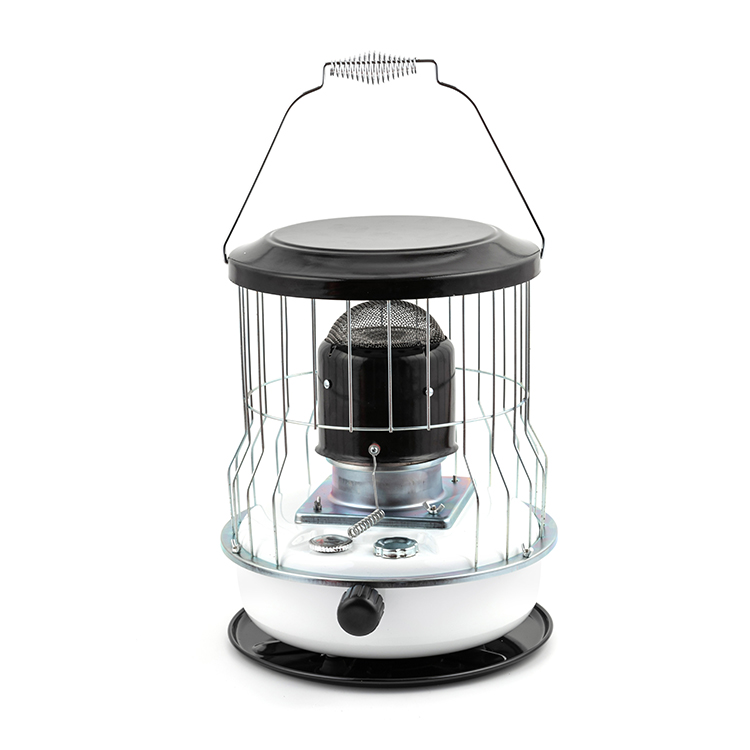
A Metal Chimney Kerosene Heater is designed to deliver heat using kerosene as fuel, typically with a wick-driven flame and adjustable output.
In practice, buyers choose this category when they need an independent heat source that can keep working during outages, in remote locations, or in facilities where
electrical heaters are impractical or too expensive to run.
Where it shines isn’t “fancy features.” It’s dependable heat in places that punish delicate equipment:
dusty workshops, semi-open warehouses, job sites with wind, and cabins where power supply is limited.
And because the design is mechanically straightforward, it’s easier to train staff on operation and maintenance—another big win for teams managing multiple sites.
A quick expectation reset
-
Kerosene heat is powerful, but safe use depends on proper ventilation and correct fuel.
-
“No smell” is not automatic—clean fuel and correct burn setup are what reduce odor.
-
These heaters are best treated as targeted zone heaters (not central HVAC replacements).
Metal chimney vs glass chimney in real conditions
If your users will operate heaters in windy areas, busy job sites, or environments where bumps and vibrations are normal, the chimney design becomes more than aesthetics.
The metal chimney approach is often favored for ruggedness and wind protection—drafts are less likely to disrupt the flame compared with more exposed designs.
|
Comparison point
|
Metal chimney
|
Glass chimney
|
|
Wind and drafts
|
Typically more protected, more stable flame in drafty areas
|
Can be more sensitive if exposed to airflow
|
|
Rugged handling
|
Generally more impact-tolerant for job sites
|
Glass components can require more careful handling
|
|
Visual flame check
|
Often less visible (depends on design)
|
Usually easier to see flame behavior at a glance
|
|
Best for
|
Workshops, warehouses, camping, wind-exposed areas
|
Controlled indoor environments where visibility is preferred
|
In other words: if your customer complains that “the flame keeps acting weird when the door opens” or “it’s too easy to snuff out outside,”
that’s exactly the kind of complaint that pushes buyers toward a Metal Chimney Kerosene Heater.
Buyer checklist that prevents costly mistakes
Most returns and negative feedback don’t come from “bad heating.” They come from mismatched expectations and missing basics—wrong sizing, wrong fuel, or weak safety planning.
Use this checklist to keep your selection aligned with real use conditions.
-
Heat output range: Don’t buy blindly. Match heater output to room size and insulation level.
-
Fuel tank capacity and runtime: Larger tanks reduce refills; verify expected burn time under typical output.
-
Flame adjustability: Adjustable flame helps users avoid overheating and improves fuel economy.
-
Ignition method: Some models use match ignition; decide if your users require a different approach.
-
Wick quality: Long-life wick materials matter for stability and service intervals.
-
Portability: Check for handles, stable base, and practical carry dimensions.
-
Odor control expectations: Ask suppliers how to minimize odor (fuel guidance + correct burn instructions).
-
Market compliance: Confirm certifications and documentation required for your target region.
-
Spare parts plan: Ensure wick availability and clear maintenance guidance.
-
Packaging and logistics: Confirm carton size, loading quantity, and labeling needs for distribution.
Procurement-friendly spec snapshot (example ranges)
Many mainstream Metal Chimney Kerosene Heater models on the market sit around a mid-size portable profile—think a fuel tank in the ~4–6 L range,
output in the high-thousands BTU per hour range, and consumption roughly a fraction of a liter per hour (exact numbers vary by model and output setting).
Use these as starting points, then validate the final specification with your supplier and the destination market requirements.
Sizing and fuel math without the guesswork
Two mistakes happen all the time: buying a heater that’s too small (customer feels cheated) or too large (customer complains it’s “too intense” or hard to control).
The simplest way to reduce this risk is to pair a sizing rule-of-thumb with clear usage guidance.
|
Space type
|
Typical size cue
|
Buyer tip
|
|
Small room / cabin corner
|
Roughly 10–15 m² (varies by insulation)
|
Choose adjustable flame to avoid overheating
|
|
Workshop zone heating
|
Target a work zone, not the whole building
|
Place heater away from airflow paths (doors, fans)
|
|
Drafty warehouse
|
Large volume, hard to heat uniformly
|
Use multiple units for zones instead of one oversized unit
|
Fuel-runtime expectation is equally important for customer satisfaction. If a user thinks they’ll get “all-day heat” but they run the heater at high output continuously,
they may be disappointed. Your product page, manual, and sales copy should explain that runtime changes with output setting and environment.
A simple runtime check
-
Confirm tank capacity (liters).
-
Confirm consumption range (liters per hour) at low vs high output.
-
Estimate runtime = tank capacity ÷ consumption.
-
Communicate the result as a range, not a single “perfect” number.
Safety setup for indoor and job-site use
Safety is the part buyers worry about most—and honestly, they should. Kerosene heaters involve open combustion, which means you must plan for ventilation,
placement, and monitoring. A Metal Chimney Kerosene Heater can be safe when used correctly, but “correctly” is not optional.
Safe setup checklist (practical, not theoretical)
-
Ventilation: Use in well-ventilated spaces. Avoid sealed rooms.
-
CO awareness: Recommend a carbon monoxide alarm where applicable.
-
Clearance: Keep generous distance from combustibles (curtains, cardboard, solvents, sawdust piles).
-
Stable surface: Flat, stable placement reduces tip-over risk.
-
Fuel handling: Use clean, appropriate kerosene; store fuel safely and away from heat sources.
-
Lighting and shutdown: Train users on lighting steps, flame adjustment, and proper shutdown to reduce odor and soot.
-
Never use as a drying rack: Do not place clothes or materials over the heater.
For indoor deployment (homes, offices, cabins), buyers often want “peace of mind features.” If your market requires specific safety devices or certifications,
make that a purchasing gate—confirm compliance early rather than dealing with issues after import or distribution.
Maintenance and troubleshooting for odor and soot
Let’s talk about the complaint everyone tries to avoid: “It smells.” In many cases, odor isn’t a mystery defect—it’s fuel quality, startup/shutdown habits,
wick condition, or incomplete combustion. If you want better reviews and fewer support tickets, give customers a clear troubleshooting path.
|
Symptom
|
Likely cause
|
Practical fix
|
|
Strong odor at startup
|
Cold wick, poor ventilation, or contaminated fuel
|
Ventilate, use clean kerosene, follow proper lighting steps
|
|
Soot or smoky flame
|
Incomplete combustion, wick needs attention, airflow issues
|
Adjust flame, check wick condition, avoid drafts directly hitting the unit
|
|
Weak heat output
|
Under-sizing or low flame setting
|
Re-check sizing, increase flame carefully, reduce room drafts
|
|
Hard to light
|
Wick too dry or worn; user steps unclear
|
Prime wick per manual; replace wick when needed; improve instructions
|
One underrated detail for distributors: include a short “best practices” card inside the carton. A small insert that covers fuel guidance, ventilation,
and shutdown steps can reduce complaints dramatically—especially if your customers are first-time users of a Metal Chimney Kerosene Heater.
Procurement notes and choosing a stable manufacturer

For B2B buyers, product performance is only half the story. The other half is supply stability: consistent build, documentation, packaging, and the ability to support
your market with compliance and after-sales parts. If you’re sourcing for distribution, you want a manufacturer that treats repeat orders as the default—not an exception.
This is where a supplier like Ningbo Zhongze Electronics Co., Ltd. can fit into a procurement plan—especially if you need a focused kerosene heater lineup,
export-oriented documentation, and the ability to discuss OEM/ODM details (branding, color, packaging, and product configuration) for your market positioning.
When evaluating any supplier, ask direct questions about consistency checks, spare parts availability (especially wicks), and certification readiness by destination.
Questions worth asking before you place a PO
-
What is the recommended fuel type and how do you reduce odor in normal use?
-
What replacement parts are stocked, and what’s the typical lead time?
-
Do you provide manuals, carton markings, and compliance documentation for my region?
-
What QC checks are performed on flame adjustment, tank sealing, and packing integrity?
-
Can you support OEM labeling and packaging for distributors?
The best sourcing outcome isn’t “cheapest unit price.” It’s fewer claims, fewer returns, better customer feedback, and a product your sales team can confidently stand behind.
A Metal Chimney Kerosene Heater is a practical product category—so your sourcing strategy should be practical too.
FAQ
Q1: Is a Metal Chimney Kerosene Heater safe for indoor use?
It can be safe when used as intended, with proper ventilation and correct operation. Indoor use requires extra attention to airflow, placement, and monitoring.
Always follow the product manual and local safety rules, and consider using a carbon monoxide alarm where appropriate.
Q2: Why do some kerosene heaters smell?
Odor is commonly linked to fuel quality, incomplete combustion, and shutdown habits. Using clean kerosene, ensuring adequate ventilation, keeping the wick in good condition,
and following correct lighting/shutdown steps typically reduces odor significantly.
Q3: What size space can one unit heat?
Coverage depends on output rating, insulation, ceiling height, and drafts. Many buyers use these heaters for zone heating (where people work) rather than trying to warm
an entire large warehouse uniformly.
Q4: What makes the “metal chimney” design valuable?
A metal chimney design is often chosen for rugged handling and better tolerance to drafts and wind compared to more exposed designs. This can help maintain a steadier flame
in real-world conditions like job sites and semi-open areas.
Q5: What should distributors include to reduce customer complaints?
Clear operating instructions, a short safety/ventilation insert, fuel guidance, and a basic troubleshooting guide (odor, soot, wick care) can reduce support load and returns.
If possible, also stock replacement wicks and provide simple replacement instructions.
Final takeaway
A Metal Chimney Kerosene Heater isn’t about trends—it’s about dependable heat in places where electricity is unreliable, expensive, or unavailable.
When you size it correctly, train users on ventilation and fuel practices, and source from a manufacturer that supports consistent quality, you get a product that performs
in the exact moments customers care about most.
Ready to source with confidence?
If you’re evaluating models, OEM options, or distribution supply for your market, contact us to discuss your application scenario and packaging/compliance needs—
and let’s match the right Metal Chimney Kerosene Heater to your customers without the usual guesswork.