A Fuel Tank Portable Glass Chimney Kerosene Stove uses liquid kerosene as its energy source and a controlled combustion system to generate heat. Its fuel tank stores the approved fuel, the burner supports combustion, and the glass chimney helps protect the flame while allowing it to remain visible. This guide explains its operating principle, major components, heating characteristics, safety considerations, maintenance requirements, and practical selection factors. It also outlines what buyers should check before choosing a portable kerosene heating appliance.
1. How Does the Stove Generate Heat?
A portable kerosene stove produces heat through the controlled combustion of kerosene. Unlike an electric heater, which relies on electrical resistance or another electrically powered heating element, this appliance uses liquid fuel to create a flame. The heat generated by combustion is transferred to the surrounding environment through radiation and convection, depending on the product's design.
In a typical wick-type design, kerosene moves from the fuel tank toward the burner through a suitable wick. The wick draws fuel upward through capillary action. When the burner is ignited according to the manufacturer's instructions, the fuel vapor near the wick burns and produces a steady flame.
The glass chimney surrounds the combustion area in models designed with this structure. It helps protect the flame from direct air disturbance and provides a visible barrier around the burning area. The exact airflow path, flame control method, and combustion arrangement vary by model.
Understanding the Heating Process
- Fuel storage: Approved kerosene is stored in the designated tank.
- Fuel delivery: The appliance's wick or fuel delivery mechanism supplies fuel to the burner.
- Ignition: The burner is ignited using the method specified in the product manual.
- Combustion: Fuel burns in the designated combustion area and releases heat.
- Heat distribution: The surrounding space receives heat through radiation and natural air movement.
Understanding this process helps buyers distinguish between the fuel system, burner, and protective chimney. It also explains why correct fuel, proper maintenance, and adequate ventilation are essential to safe operation.
2. What Are the Main Components?
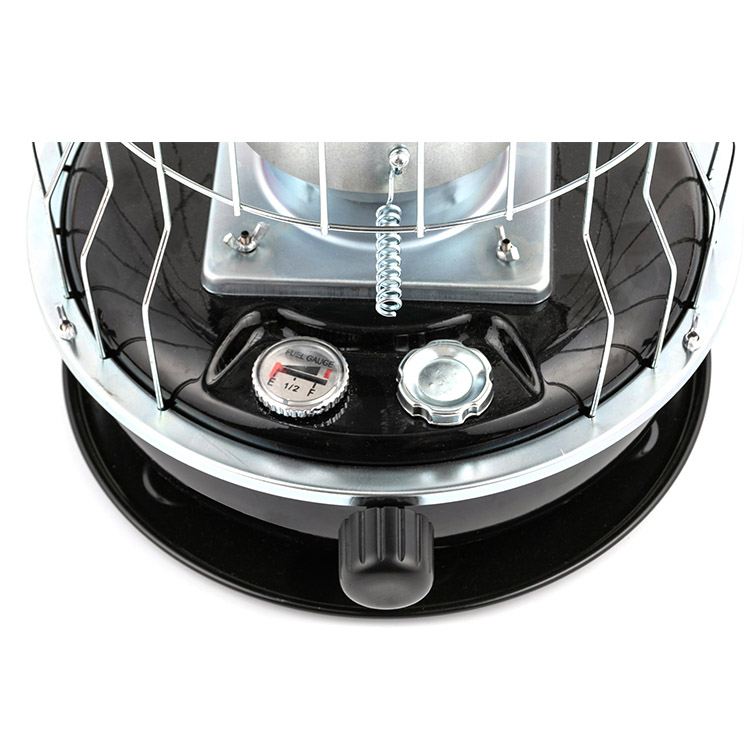
A portable glass chimney kerosene stove combines several functional components. Each part contributes to fuel storage, combustion, heat protection, or user control. Although construction details differ among manufacturers, understanding the basic structure makes product evaluation easier.
| Component | Main Function | What Buyers Should Check |
|---|---|---|
| Fuel tank | Stores the designated liquid fuel | Capacity, sealing, material, and leakage resistance |
| Burner assembly | Supports controlled fuel combustion | Construction quality and flame stability |
| Wick or fuel delivery system | Moves fuel toward the combustion area | Compatibility and replacement availability |
| Glass chimney | Surrounds and protects the flame | Heat resistance and physical condition |
| Ignition mechanism | Helps start the appliance | Reliable operation and clear instructions |
| Protective frame | Supports and protects key components | Stability, finish, and assembly quality |
| Control mechanism | Adjusts or shuts down operation where provided | Ease of use and clear operating positions |
Why Component Compatibility Matters
Individual parts should work together as a complete heating system. A well-made tank cannot compensate for a poorly fitted burner, and a durable glass chimney cannot ensure safe operation if the appliance has an unstable base. Buyers should therefore assess the complete product rather than focusing on one attractive feature.
For distributors and importers, consistency between production batches is also important. Component dimensions, assembly quality, and replacement-part availability can influence long-term customer satisfaction and after-sales costs.
3. Why Does the Glass Chimney Matter?
The glass chimney is one of the most recognizable features of this type of kerosene stove. It forms a protective enclosure around the flame and allows users to observe the combustion area without directly exposing the flame to the surrounding space.
Its design can help reduce the effect of minor air disturbances, depending on the appliance's airflow arrangement. It may also contribute to a more organized appearance and make it easier for users to observe changes in flame behavior during operation.
Important Glass Chimney Characteristics
- Heat resistance: The glass must be suitable for the temperatures and thermal conditions specified by the manufacturer.
- Clear visibility: A transparent surface allows users to observe the flame and identify unusual changes.
- Proper fitting: The chimney should sit securely in its intended position.
- Physical condition: Cracks, chips, or other damage may compromise the component and require replacement.
- Cleaning requirements: The surface should be maintained according to the manufacturer's instructions.
Users should never assume that ordinary household glass is an acceptable replacement. The correct replacement part must be specified for the particular model. A damaged glass chimney should not be used, and it should never be touched or removed while hot.
4. How Does the Fuel Tank Support Operation?
The fuel tank is responsible for storing the kerosene required by the appliance. Its capacity affects how much fuel can be stored, while its construction and sealing influence product reliability. For portable models, tank design also affects the overall size, weight, and handling characteristics.
Tank capacity alone does not determine operating duration. Actual fuel consumption depends on burner design, flame setting, operating conditions, fuel quality, and the specific model. Buyers should refer to verified manufacturer specifications rather than estimating performance from tank size alone.
Fuel Tank Features Worth Evaluating
- Suitable material and manufacturing quality.
- Secure filling arrangement and compatible cap design.
- Reliable seals and joints.
- Clear maximum filling guidance.
- Practical access for inspection and cleaning where applicable.
- Resistance to leakage during normal handling and use.
5. What Affects Heating Performance?
Heating performance is influenced by more than the nominal size of the appliance. The burner design, fuel delivery system, fuel condition, and surrounding environment all affect how effectively heat is produced and distributed.
Burner Design and Flame Stability
A properly designed burner supports consistent combustion under the operating conditions specified by the manufacturer. An unstable flame, unusual odor, visible smoke, or persistent soot may indicate a problem with fuel quality, wick condition, adjustment, ventilation, or appliance maintenance. Users should stop operation and consult the manual or a qualified service provider if abnormal behavior occurs.
Room Size and Environmental Conditions
A portable kerosene stove is generally intended for localized heating rather than automatically serving as a whole-building heating system. A space that is too large, poorly insulated, or exposed to strong air movement may not reach the desired temperature. Buyers should check the manufacturer's stated heating suitability and never assume that a larger fuel tank means greater heating coverage.
Fuel Consumption and Operating Time
Operating time depends on the usable fuel capacity and the actual consumption rate under a given operating setting. If a manufacturer provides these figures, buyers should check the test conditions and whether the figures are typical, maximum, or measured under a specific setting.
6. Where Can a Portable Kerosene Stove Be Used?
Portable kerosene heating appliances may be considered for certain temporary or outdoor heating applications, subject to the product's approved use conditions and local regulations. Their portability can be useful where a fixed heating installation is impractical, but portability does not mean that the appliance is suitable for every environment.
Potential Application Scenarios
- Outdoor work areas: Certain approved models may provide localized warmth in suitable open-air environments.
- Temporary facilities: A portable design may be considered for temporary heating needs when the manufacturer's requirements can be met.
- Workshops: Product suitability depends on the presence of combustible materials, ventilation, and applicable workplace rules.
- Rural settings: Some users may consider kerosene appliances where conventional heating infrastructure is limited.
Not every model is approved for indoor use, enclosed spaces, sleeping areas, tents, vehicles, or other confined environments. Carbon monoxide can be produced by incomplete combustion, and it cannot be reliably detected by smell. Always follow the product's specific installation and ventilation instructions, applicable regulations, and required safety equipment. Never use an outdoor-only appliance indoors.
7. How Should the Stove Be Operated?
Correct operation starts before ignition. Users should become familiar with the appliance's instructions, identify the approved fuel, and inspect the unit for visible damage. The exact starting and shutdown process varies by design, so the product manual must always take priority over general guidance.
Before Starting
- Place the appliance on a stable, level, non-combustible surface.
- Check the tank, cap, burner, glass chimney, and protective frame.
- Confirm that there is no fuel leakage or unusual fuel odor.
- Ensure that the surrounding area meets the manufacturer's clearance and ventilation requirements.
- Confirm that the correct fuel has been used and that the wick or fuel system is in the required condition.
During Operation
Keep the appliance in its designated operating position. Do not move it while burning, leave it unattended, or allow children and pets to approach it. Do not place clothing, paper, packaging, or other combustible objects on or near the heater. Keep all air openings clear.
After Use
Turn off the appliance using its specified shutdown method. Allow it to cool completely before moving, cleaning, inspecting, or storing it. Do not attempt to accelerate cooling with water or by removing hot components.
8. Which Safety Precautions Are Essential?
Because kerosene appliances use open combustion, safety must be considered a fundamental part of product selection and daily operation. A portable structure does not remove the risks associated with flame, hot surfaces, fuel, and combustion gases.
| Potential Risk | Recommended Precaution |
|---|---|
| Fire or ignition | Keep the appliance away from combustible materials and ignition hazards. |
| Fuel leakage | Inspect the tank and connections before use; never operate a leaking unit. |
| Carbon monoxide | Use only in locations and conditions explicitly approved by the manufacturer. |
| Burn injuries | Keep hands and objects away from hot surfaces and the glass chimney. |
| Unstable placement | Use a level, stable, non-combustible surface. |
| Improper refilling | Shut down and cool the appliance completely before refueling. |
| Damaged components | Stop using the appliance until damaged parts are correctly replaced. |
Where required by local regulations and the manufacturer's instructions, use an appropriate carbon monoxide alarm. An alarm is an additional safeguard, not a substitute for proper ventilation or correct appliance use. If anyone experiences headache, dizziness, nausea, weakness, or confusion while a fuel-burning appliance is operating, move to fresh air immediately and seek emergency assistance.
9. How Can Users Maintain the Stove?
Regular maintenance helps preserve the appliance's condition and makes it easier to identify problems before the next operating period. The maintenance schedule should be based on the manufacturer's instructions and the frequency of use.
Routine Maintenance Checklist
- Inspect the tank, cap, seals, and visible joints for damage or leakage.
- Check the glass chimney for cracks, chips, and other physical defects.
- Clean accessible surfaces only after the appliance has cooled completely.
- Inspect the wick or fuel delivery system according to the manual.
- Use only compatible replacement components.
- Store the appliance in a dry, secure location as instructed.
- Keep the operating manual and maintenance records available.
Do not dismantle the burner or modify the fuel system unless the manufacturer specifically authorizes the procedure. Repairs involving combustion components should be performed by appropriately qualified personnel.
10. What Should Buyers Check Before Purchasing?
For individual users, the main concerns are safe operation, ease of handling, and suitability for the intended environment. For wholesalers, distributors, and importers, product consistency, documentation, packaging, and after-sales support are also important.
Buyer Evaluation Checklist
- Confirm the intended application and whether the model is approved for it.
- Check fuel tank capacity and verified fuel consumption data.
- Review dimensions, weight, and portability features.
- Evaluate the glass chimney material and replacement availability.
- Ask about burner construction and maintenance requirements.
- Check applicable product safety standards and supporting documentation for the target market.
- Confirm packaging, spare parts, warranty terms, and order requirements.
Buyers should request a product specification sheet and clear operating instructions before making a purchasing decision. If the appliance will be distributed internationally, importers should also confirm local requirements for fuel-burning heating products, labeling, testing, and transportation.
11. About Ningbo Zhongze Electronics Co., Ltd.
Ningbo Zhongze Electronics Co., Ltd. is the brand name to look for when discussing product information and potential cooperation related to portable heating appliances. For buyers evaluating a Fuel Tank Portable Glass Chimney Kerosene Stove, clear specifications and reliable communication are essential parts of the purchasing process.
Before placing an order, business customers can request information about product dimensions, fuel tank capacity, burner configuration, materials, packaging, available accessories, and applicable compliance documents. Confirming these details helps ensure that the selected model matches the requirements of the intended market.
For distributors and wholesale buyers, discussing order quantities, sample arrangements, lead times, and spare-part support in advance can also make purchasing and inventory planning more efficient.
12. Frequently Asked Questions
Q1: How does a portable glass chimney kerosene stove work?
It burns approved kerosene through a burner system. In a wick-type model, the wick draws fuel from the tank toward the combustion area, where it is ignited to generate heat.
Q2: What is the function of the glass chimney?
The glass chimney surrounds the flame, helps protect it from direct air disturbance according to the product design, and allows users to observe the combustion area.
Q3: Can this type of stove be used indoors?
Only if the specific model is explicitly approved for indoor use and all manufacturer instructions and local regulations are followed. Outdoor-only models must never be used indoors or in enclosed spaces.
Q4: How long can a full fuel tank operate?
Operating time depends on usable tank capacity, fuel consumption, burner setting, and product design. Refer to the manufacturer's verified specifications for the actual model.
Q5: Can ordinary glass replace a damaged chimney?
No. Replacement glass must be specified for the particular appliance. Do not operate the stove with a cracked or damaged chimney.
Q6: How often should the stove be maintained?
Maintenance frequency depends on usage and the manufacturer's recommendations. Users should inspect the appliance before use and follow the specified cleaning and servicing schedule.
Q7: What fuel should be used?
Use only the fuel type approved in the product manual. Other fuels may cause abnormal combustion, damage, or serious safety hazards.
Q8: What information should wholesalers request?
Useful information includes tank capacity, dimensions, weight, fuel consumption, materials, burner details, packaging specifications, compliance documentation, and spare-part availability.
Looking for a Portable Kerosene Heating Solution?
Choosing the right heating appliance requires more than comparing appearance and tank size. Product construction, operating requirements, safety instructions, and market suitability all deserve careful consideration.
For product specifications, wholesale inquiries, and cooperation opportunities, contact Ningbo Zhongze Electronics Co., Ltd.today. Please contact us to discuss your requirements and request further product information.