Outdoor camping in cold weather requires practical heating equipment that combines portability, fuel capacity, stable combustion, and convenient operation. A Fuel Tank Glass Chimney Kerosene Stove for Outdoor Camping offers a traditional liquid-fuel heating solution with an integrated fuel tank, adjustable wick, and protective glass chimney. Its design makes it worth considering for suitable outdoor heating applications where electrical power may not be readily available.
However, choosing the right kerosene heater involves more than looking at its appearance or fuel tank capacity. Buyers need to understand heating output, fuel consumption, burning duration, glass chimney construction, wick maintenance, transportation requirements, and operating safety. This guide explains how the equipment works, what benefits its design can offer, how to evaluate product specifications, and what distributors and outdoor equipment buyers should consider before purchasing.
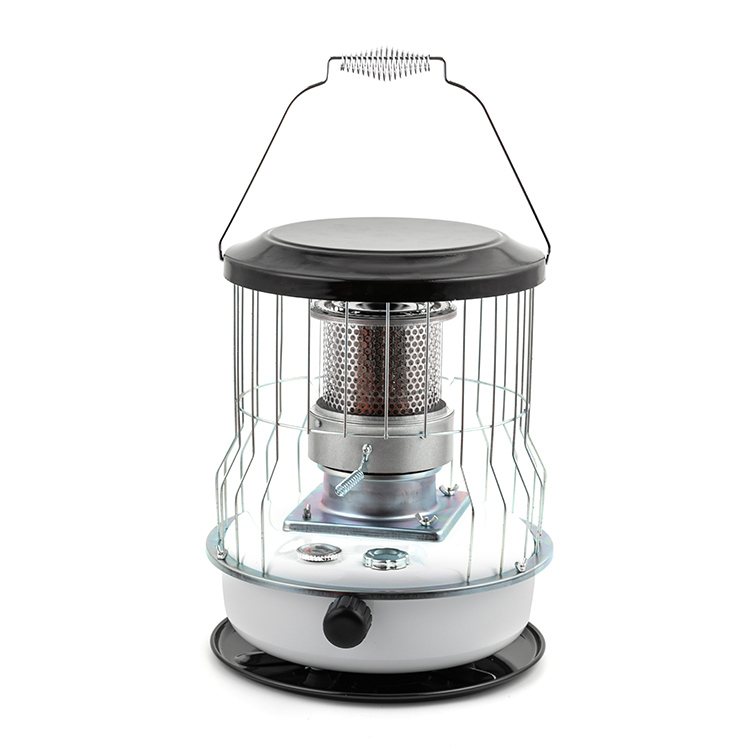
1. Understanding a Fuel Tank Glass Chimney Kerosene Stove
Cold weather can make outdoor activities uncomfortable, especially during camping trips, fishing excursions, outdoor gatherings, and other activities in low-temperature environments. For users who need a portable heating solution without depending on an electrical connection, kerosene heating equipment can be a practical option when used in an appropriate, well-ventilated outdoor setting.
A Fuel Tank Glass Chimney Kerosene Stove for Outdoor Camping is a portable liquid-fuel heating appliance that typically combines an integrated fuel tank, a wick-based burner, a glass chimney, and a supporting metal structure. Kerosene is supplied from the tank to the wick, where it is vaporized and burned to generate heat.
The glass chimney surrounds the combustion area and helps protect the flame from direct drafts. It also allows users to observe the flame during operation, making it easier to identify visible changes in combustion conditions.
Unlike electric heaters, this type of equipment does not require a mains power connection for its basic heating function. This characteristic can be useful in outdoor locations where access to electricity is limited.
Key design concept: The integrated fuel tank provides a convenient fuel supply, while the glass chimney helps shield and stabilize the flame. Together with an adjustable wick, these components form the basic structure of a traditional portable kerosene heater.
What Makes the Integrated Fuel Tank Useful?
An integrated tank combines fuel storage and the heating unit into one assembly. This reduces the need for a separate external fuel container during normal operation and helps create a more compact product structure.
For outdoor equipment distributors, an integrated tank design can also make the product easier to position as a portable heating appliance. However, the tank must be handled carefully during transportation, filling, storage, and operation.
2. Why Is a Glass Chimney Important?
The glass chimney is one of the most recognizable features of this type of kerosene heating equipment. It performs several practical functions related to flame protection, combustion observation, and product design.
2.1 Helps Protect the Flame from Direct Drafts
Outdoor environments are affected by changing wind conditions. Strong air movement can disturb a burner flame, making combustion less stable. A properly designed glass chimney helps shield the flame from direct drafts and supports more consistent burning under suitable operating conditions.
However, a glass chimney does not make a kerosene heater windproof. The appliance should still be operated in accordance with its instructions and protected from unsuitable wind exposure without enclosing it in an unsafe space.
2.2 Allows Visual Flame Inspection
Transparent glass allows users to observe the combustion area without removing protective components. Visible flame behavior can help users recognize obvious irregularities, such as an unusually high flame, excessive soot, or unstable burning.
Visual observation does not replace proper maintenance or safety monitoring, but it provides useful operating information.
2.3 Supports a Traditional Heating Structure
The glass chimney is also an important visual element of traditional kerosene heaters. Combined with the metal housing and fuel tank, it creates a recognizable design that appeals to users who prefer conventional liquid-fuel heating equipment.
2.4 Requires Careful Handling
Glass components need appropriate protection during transportation and use. Sudden impact, excessive mechanical stress, or thermal shock can damage the chimney. Buyers should check the glass quality, installation method, and availability of replacement components.
3. How Does a Fuel Tank Kerosene Stove Work?
A wick-type kerosene heater uses capillary action to move fuel from the tank toward the burner. The wick absorbs kerosene and supplies it to the combustion area, where the fuel is burned to release thermal energy.
The Basic Heating Process
-
Fuel storage: Kerosene is stored in the integrated fuel tank within the manufacturer's specified filling limit.
-
Fuel absorption: The wick absorbs fuel from the tank through capillary action.
-
Fuel delivery: The wick transports kerosene toward the upper combustion area.
-
Ignition: The wick is ignited using the specified ignition method.
-
Heat generation: Fuel combustion produces thermal energy that is released into the surrounding environment.
-
Flame adjustment: The wick height can be adjusted on compatible models to regulate the flame within the manufacturer's operating limits.
Why Does Wick Quality Matter?
The wick directly influences fuel delivery and combustion performance. An unsuitable, damaged, contaminated, or incorrectly adjusted wick can contribute to uneven burning, excessive smoke, odor, or difficult ignition.
Using the correct replacement wick and following the manufacturer's maintenance instructions are important for maintaining consistent performance.
How Does the Adjustable Flame Function Help?
An adjustable wick allows users to control the flame within the permitted range. This provides flexibility when operating conditions or heating requirements change.
However, raising the wick excessively does not necessarily improve heating efficiency. It can produce soot, smoke, and incomplete combustion. Always use the recommended flame height.
4. Key Features and Product Advantages
A portable fuel tank glass chimney kerosene heater combines several design features that can make it suitable for particular outdoor heating requirements.
01. Integrated Fuel Tank
Combines fuel storage and the burner assembly in one portable structure.
02. Glass Chimney
Helps shield the flame from direct drafts and provides visual access to the combustion area.
03. Adjustable Wick
Allows flame regulation within the equipment's specified operating range.
04. Portable Construction
Supports transportation and positioning in suitable outdoor locations.
05. Independent Fuel Operation
Does not require a mains electrical connection for basic combustion and heating.
06. Long Operating Potential
A relatively large fuel tank can support extended operation, depending on actual fuel consumption.
Practical Heating Without Electrical Dependence
One advantage of liquid-fuel heating equipment is that its primary heat source is fuel rather than electricity. This can be helpful at remote outdoor locations where power outlets are unavailable.
Users still need to consider the weight of the appliance, fuel transportation, ventilation requirements, ignition method, and local restrictions on fuel-burning equipment.
Why Fuel Capacity Matters
Fuel tank capacity affects how frequently the heater needs refilling. A larger tank may support longer operating periods, but it also increases the amount of fuel carried by the appliance.
For camping equipment buyers, the right capacity should balance expected operating duration, portability, and transportation convenience.
5. Understanding the Main Product Specifications
Product specifications help buyers determine whether a kerosene heater is appropriate for their intended application. The following example uses the published specifications of the ZOOZAA 4.6L Glass Chimney Kerosene Heater associated with Ningbo Zhongze Electronics Co., Ltd.
|
Specification
|
Reference Parameter
|
|
Product Type
|
Glass Chimney Kerosene Heater
|
|
Model
|
ZZ-2203
|
|
Fuel Tank Capacity
|
4.6 L
|
|
Heat Output
|
Approximately 7,800–9,000 BTU/h
|
|
Fuel Consumption
|
Approximately 0.25 L/h
|
|
Reference Heating Area
|
Approximately 22 m²
|
|
Continuous Burning Time
|
Up to approximately 18 hours under specified conditions
|
|
Ignition Method
|
Manual match ignition
|
|
Net Weight
|
Approximately 4.2 kg
|
|
Gross Weight
|
Approximately 4.6 kg
|
|
Packing Dimensions
|
Approximately 32.5 × 32.5 × 37 cm
|
Understanding Fuel Consumption and Burning Duration
Fuel consumption is an important factor when estimating how long a heater can operate. A simple theoretical calculation can be made using tank capacity and hourly consumption.
Estimated operating time = Fuel tank capacity ÷ Fuel consumption per hour
For a 4.6 L tank operating at approximately 0.25 L/h:
4.6 ÷ 0.25 = 18.4 hours
This is a theoretical estimate. Actual operating duration depends on wick adjustment, fuel characteristics, operating conditions, and usable tank capacity. Never continue operating the appliance below its specified minimum fuel level.
Why Heating Output Should Not Be the Only Selection Factor
BTU/h indicates the amount of thermal energy produced per hour. However, actual comfort depends on outdoor temperature, wind exposure, distance from the heater, and the surrounding environment.
The published heating-area figure should be treated as a reference under specified conditions, not as a guarantee that an open outdoor space of that size will reach a particular temperature.
Specification reminder: Always confirm the latest model datasheet, fuel requirements, certification documents, and operating instructions before ordering. Different models may have different tank capacities, output levels, dimensions, and accessories.
6. Outdoor Applications and Practical Uses
Portable kerosene heating equipment may be considered for several outdoor activities and suitable ventilated work environments. Its suitability depends on local regulations, weather conditions, and the manufacturer's approved application range.
6.1 Outdoor Camping Areas
At designated outdoor camping locations, a portable heater may provide supplementary warmth in an open, stable, and appropriately ventilated area. Its fuel-based operation can be useful when electrical infrastructure is unavailable.
It must never be operated inside a tent, sleeping enclosure, vehicle, or other enclosed camping shelter unless the specific appliance is explicitly certified and approved for that exact application. A typical portable wick kerosene heater should be treated as outdoor-only equipment.
6.2 Fishing and Outdoor Recreation
Fishing trips and outdoor recreational activities may involve extended periods of exposure to cold weather. Portable heating equipment can be useful in appropriate open-air locations, provided it does not create a fire hazard or interfere with surrounding activities.
6.3 Outdoor Work Areas
Workers at temporary outdoor stations may need supplementary warmth during cold-weather operations. A suitable kerosene heater can provide a fuel-based heating option where electrical connections are limited.
Workplace use requires a formal safety assessment, adequate ventilation, fire protection, and compliance with occupational safety requirements.
6.4 Emergency and Backup Heating
Fuel-powered heating equipment may be considered as part of an emergency heating plan for suitable outdoor or approved ventilated applications. Users should prepare the correct fuel, inspect the equipment regularly, and follow local emergency safety guidance.
6.5 Outdoor Equipment Distribution
For outdoor product wholesalers and camping equipment distributors, glass chimney kerosene heaters can form part of a broader range of portable heating products. Buyers can evaluate different tank sizes, designs, colors, packaging options, and product configurations according to their target market.
Important: A conventional kerosene heater is not automatically a cooking stove. Do not place cookware on the appliance or use it for food preparation unless the manufacturer explicitly designs and approves that specific model for cooking.
7. How to Choose the Right Camping Kerosene Stove
Selecting a suitable product requires evaluating more than its exterior design. Buyers should compare fuel capacity, heating output, portability, combustion structure, product documentation, and after-sales support.
7.1 Choose the Appropriate Fuel Tank Capacity
Consider how long the heater is expected to operate between refills. A 4.6 L tank may be suitable for buyers seeking a relatively long operating period, subject to the actual fuel consumption and operating instructions.
7.2 Evaluate Heating Output
Compare the rated BTU/h output with the intended heating application. For outdoor environments, wind exposure and open-air heat loss should be considered when evaluating practical heating performance.
7.3 Inspect the Glass Chimney
Check the glass for clarity, consistent dimensions, secure positioning, and visible manufacturing defects. Ask about replacement glass availability and protective packaging for international transportation.
7.4 Check the Wick and Burner Structure
The wick should be compatible with the burner design and suitable for the specified fuel. Buyers should also confirm that replacement wicks and maintenance instructions are available.
7.5 Consider Portability
Net weight, overall dimensions, carrying convenience, and packaging protection all influence transportation. A product intended for outdoor recreation should be practical to handle without compromising stability.
7.6 Verify Product Compliance
Different countries and regions may have different requirements for fuel-burning heating appliances. Buyers should confirm applicable product safety standards, labeling, fuel restrictions, and certification requirements for their target markets.
|
Selection Factor
|
What to Evaluate
|
Buyer Benefit
|
|
Fuel Capacity
|
Tank volume and usable fuel capacity
|
Helps estimate refilling frequency.
|
|
Heat Output
|
Rated BTU/h
|
Helps match the product to heating requirements.
|
|
Fuel Consumption
|
Liters per hour
|
Helps estimate operating costs and duration.
|
|
Glass Chimney
|
Material quality and replacement availability
|
Supports maintenance and transportation planning.
|
|
Wick System
|
Material, adjustment, and replacement options
|
Supports consistent combustion.
|
|
Certifications
|
Applicable market approvals and test reports
|
Helps meet import and distribution requirements.
|
|
Packaging
|
Glass protection and carton strength
|
Helps reduce transportation damage.
|
8. Fuel Management and Maintenance Tips
Proper fuel management and regular maintenance are essential for the performance and safe operation of kerosene heating equipment.
Use the Correct Fuel
Always use the fuel type specified by the manufacturer. Do not substitute gasoline, alcohol, diesel, or other fuels unless the appliance documentation explicitly approves them. Incorrect fuel can cause abnormal combustion, fire hazards, or equipment damage.
Inspect the Fuel Tank Regularly
-
Check the tank for visible damage, corrosion, or leakage.
-
Inspect the fuel cap and sealing components.
-
Keep the filling area clean and free of debris.
-
Never exceed the manufacturer's filling limit.
-
Store fuel in an approved, properly labeled container away from ignition sources.
Maintain the Wick
The wick is a consumable component that requires appropriate inspection and maintenance. Over time, fuel deposits, carbon buildup, and physical wear may affect its performance.
Follow the manufacturer's instructions for cleaning, adjustment, and replacement. Do not trim or modify the wick unless the product instructions specifically permit it.
Protect the Glass Chimney
Allow the appliance to cool completely before handling or cleaning the glass. Avoid sudden temperature changes and use only suitable cleaning methods. Replace damaged or cracked glass before operating the heater again.
Store the Heater Properly
When the heating season ends, follow the manufacturer's instructions for draining or storing remaining fuel. Keep the appliance clean and dry, protect the glass chimney from impact, and store the equipment in a suitable location away from children and ignition sources.
9. Essential Safety Considerations
Safety is one of the most important factors when using any fuel-burning heating appliance. Kerosene combustion consumes oxygen and produces combustion gases, including carbon monoxide (CO), which is colorless and odorless and can cause serious poisoning or death.
Although a glass chimney helps protect the flame, it does not remove combustion gases or make the appliance safe for enclosed spaces.
Operate Only in Approved Locations
-
Use the heater outdoors or only in locations explicitly approved by the manufacturer and local safety regulations.
-
Never operate a conventional outdoor kerosene heater inside a tent, sleeping area, vehicle, or enclosed shelter.
-
Do not assume that opening a tent door or window makes an indoor or enclosed installation safe.
-
Do not use the appliance in a poorly ventilated workshop, garage, or room.
Keep the Heater Away from Combustible Materials
Maintain the required clearance from tents, sleeping bags, clothing, paper, dry leaves, plastic materials, and other flammable objects. Place the heater on a firm, level, noncombustible surface where it cannot be easily knocked over.
Never Refuel a Hot or Operating Heater
Turn off the appliance and allow it to cool completely before refueling. Spilled kerosene near a hot burner can ignite and cause a serious fire. Clean up any accidental spills according to the manufacturer's instructions before restarting the equipment.
Monitor the Appliance During Operation
Do not leave the heater unattended. Keep children and pets away from hot surfaces and the glass chimney. Never move or transport the appliance while it is burning or hot.
Recognize Abnormal Combustion
Excessive smoke, soot, unusual odor, unstable flames, or visible fuel leakage may indicate a problem. Extinguish the heater according to its instructions, allow it to cool, and inspect it before further use.
Carbon monoxide warning: A portable kerosene heater can produce dangerous carbon monoxide. Never use an ordinary outdoor kerosene heater in an enclosed camping tent, vehicle, or sleeping space. A carbon monoxide alarm does not make an unsuitable installation safe.
10. Common Problems and Practical Solutions
Understanding common operating problems can help users identify maintenance needs and avoid continued operation under abnormal conditions.
|
Problem
|
Possible Cause
|
Recommended Action
|
|
Difficulty Igniting
|
Incorrect wick position, insufficient fuel supply, or unsuitable ignition procedure.
|
Follow the manufacturer's ignition instructions and inspect the wick after cooling.
|
|
Excessive Smoke
|
Incorrect wick adjustment, contaminated fuel, or incomplete combustion.
|
Extinguish the heater and inspect the fuel and wick system.
|
|
Uneven Flame
|
Uneven wick height, damaged wick, or unstable installation.
|
Allow the appliance to cool and check the burner assembly.
|
|
Short Burning Duration
|
Higher-than-expected fuel consumption or insufficient usable fuel.
|
Check the specified fuel consumption and tank filling procedure.
|
|
Unusual Fuel Odor
|
Fuel spillage, leakage, or abnormal combustion.
|
Stop operation, move away from ignition sources, and inspect the appliance after cooling.
|
|
Cracked Glass Chimney
|
Impact, thermal shock, or mechanical stress.
|
Stop using the heater and replace the glass with an approved component.
|
Users should never attempt to repair a leaking fuel tank or modify the burner while the appliance is operating. Serious structural or combustion problems should be handled by qualified service personnel.
11. What Should Buyers Consider Before Ordering?
For international distributors, wholesalers, and outdoor equipment brands, purchasing a kerosene heater requires attention to product consistency, safety documentation, packaging, and long-term supply support.
Evaluate the Manufacturer's Production Capabilities
A capable manufacturer should have established production procedures, product inspection processes, and technical personnel who understand the construction of fuel-burning heating equipment.
Buyers should ask about factory quality control, component inspection, assembly standards, and final product testing.
Confirm Product Certifications
Do not rely only on a general statement that a product is certified. Request the relevant certificates, test reports, model references, and applicable market standards. Verify that the documentation corresponds to the exact product being purchased.
Discuss OEM and ODM Requirements
Different distributors may require customized branding, packaging, product colors, or other design details. Discuss these requirements before production to confirm technical feasibility, minimum order quantities, and development schedules.
Check Spare Parts Availability
Glass chimneys, wicks, fuel caps, and other service components may require replacement during the product's service life. Confirm whether compatible replacement parts can be supplied and whether maintenance instructions are available.
Review Transportation and Packaging
Glass components need suitable protective packaging. International buyers should evaluate carton strength, internal cushioning, packing dimensions, loading quantities, and transportation arrangements to reduce damage during shipment.
Why Consider Ningbo Zhongze Electronics Co., Ltd.?
Ningbo Zhongze Electronics Co., Ltd. is a manufacturer and exporter specializing in kerosene heaters. The company develops and supplies different heating products, including glass chimney and metal chimney kerosene heater models.
With product development, manufacturing, and OEM/ODM experience, the company works with customers seeking different product configurations and market requirements.
For distributors and wholesale buyers, discussing fuel tank capacity, heating output, product appearance, branding, and packaging requirements with the manufacturer can help establish a product configuration that matches the intended market.
Buyer Checklist Before Placing an Order
-
Confirm the exact product model and intended application.
-
Check fuel tank capacity and rated heat output.
-
Verify fuel consumption and estimated operating duration.
-
Confirm the approved fuel type and ignition method.
-
Inspect the glass chimney material and replacement options.
-
Check wick specifications and spare parts availability.
-
Request relevant product safety certificates and test reports.
-
Confirm packaging protection for glass components.
-
Discuss OEM branding and customization requirements.
-
Clarify minimum order quantity, production lead time, and warranty terms.
12. Frequently Asked Questions
Q1. What is a fuel tank glass chimney kerosene stove?
It is a portable wick-type kerosene heating appliance featuring an integrated fuel tank and a protective glass chimney. Kerosene is supplied to the wick and burned to produce heat. Its actual approved applications depend on the product design and manufacturer instructions.
Q2. Why does a kerosene heater use a glass chimney?
The glass chimney helps shield the flame from direct drafts and allows users to observe combustion. It also forms an important part of the heater's overall structure.
Q3. How long can a 4.6L kerosene heater operate?
For a model with approximately 0.25 L/h fuel consumption, a 4.6 L tank gives a theoretical operating time of about 18.4 hours. Actual duration depends on usable fuel capacity and operating conditions.
Q4. Is a glass chimney kerosene heater suitable for camping?
It may be suitable for approved open-air outdoor heating applications. However, a conventional outdoor kerosene heater must never be operated inside a tent, enclosed shelter, vehicle, or sleeping space because of carbon monoxide and fire risks.
Q5. Does a kerosene heater require electricity?
A traditional wick-type model with manual ignition does not require a mains electrical connection for its basic heating operation. Always check the specific model's ignition and control design.
Q6. What fuel should be used in a kerosene heater?
Use only the fuel specified by the manufacturer. Different fuel types have different combustion characteristics, and unsuitable substitutes may cause smoke, malfunction, or fire hazards.
Q7. How often should the wick be replaced?
Replacement frequency depends on fuel quality, operating frequency, maintenance, and wick condition. Follow the manufacturer's inspection and replacement recommendations rather than relying on a universal schedule.
Q8. Can a kerosene heater be used for cooking?
Not automatically. A heating appliance should not be used as a cooking stove unless the manufacturer explicitly designs and approves it for that purpose.
Q9. What causes black smoke from a kerosene heater?
Black smoke may indicate incomplete combustion caused by incorrect wick adjustment, contaminated fuel, or burner problems. Stop using the appliance, allow it to cool, and inspect it according to the manufacturer's instructions.
Q10. What should distributors check when sourcing kerosene heaters?
Distributors should evaluate product specifications, safety compliance, factory quality control, packaging, spare parts, customization options, minimum order quantities, and after-sales support.
Q11. Does Ningbo Zhongze Electronics Co., Ltd. provide customized kerosene heaters?
The company offers OEM and ODM cooperation for its kerosene heater products. Buyers can contact the manufacturer to discuss branding, colors, materials, product configurations, and order requirements.
Q12. What information is needed to request a quotation?
Provide the preferred model, fuel tank capacity, heating output, target market, expected order quantity, packaging requirements, and any customization details. This information helps the manufacturer prepare a more suitable quotation.
Conclusion: Finding a Practical Outdoor Kerosene Heating Solution
A Fuel Tank Glass Chimney Kerosene Stove for Outdoor Camping offers a traditional fuel-based heating solution with an integrated tank, adjustable wick, and protective glass chimney. Its independent fuel operation and relatively simple structure make it worth considering for suitable outdoor heating requirements.
However, a good purchasing decision should consider more than fuel capacity and heating output. Glass quality, wick performance, fuel consumption, portability, product durability, safety documentation, and replacement part availability all influence the overall value of the equipment.
For outdoor equipment distributors, importers, and wholesale buyers, working with a specialized manufacturer can help simplify product selection and customization. Carefully evaluating technical specifications and market requirements before ordering is an important step toward building a reliable product range.
Looking for a Reliable Glass Chimney Kerosene Heater Manufacturer?
Ningbo Zhongze Electronics Co., Ltd. specializes in kerosene heating products and provides product solutions for customers in different markets.
Whether you are sourcing a fuel tank glass chimney kerosene heater for outdoor applications, developing a private-label product range, or looking for OEM and ODM cooperation, our team is ready to discuss your requirements.
Contact us today to learn more about product specifications, customization options, wholesale orders, and cooperation opportunities. Let us help you find a suitable kerosene heating solution for your business.
Contact Us for Product Details